When do you really need a storyboard to plan and direct a short film?
To run good rehearsals and not drive everyone (especially yourself) crazy, a storyboard helps you figure out how you want to film before showing up to shoot.
When do you really need a storyboard to plan and direct a short film? Probably the best way to answer that is to explain how I chose which of my own screenplays to illustrate with storyboards.
The Long Single Take story (“Cafeteria”) was an easy choice. Since the point of the exercise is that it’s got to be filmed in one single take, it puts a lot of planning and prep on the director (and the DP or whoever’s running camera).
The storyboard helps you decide what angles you want, how close you’ll be, how much time to spend and where, the path of the camera through the space, what’s going to be in front of the camera and in what sequence the purely visual things will happen… the script won’t give you these things.
The Silent Film script (“Pee Shy”) is the other story that really seemed to need a storyboard. It’s not nearly as complicated to shoot as the Long Single Take. But, since it’s a story told without words, the screenplay doesn’t seem to necessarily cover everything you need to start filming. The storyboard fills in some gaps left by the words. It is also a useful tool for planning and rehearsal in a visual medium.
By contrast, some films will be made with a lot more improv by the director and his or her collaborators. The pseudo-documentary films are like that. It seemed limiting to try to make storyboards for those.
Any storyboard I make will be abandoned quickly if the script is significantly tweaked. Some scripts, like the actress showcase “Workin’ Girl”, will be so specific to a particular actress and her gifts that significant script change seems likely. In such cases, the storyboard will come from the people who are going to make the film. Making a storyboard may even precede the script rewrite.
Bottom line: How you want to film some projects must be thought out, in detail, in advance.
We just included storyboards with two out of the 26 short scripts in the book. This is Volume One, so I’m looking for feedback. Do you actually use the included storyboards, or make your own? Because of the Creative Commons licensing, we expect people to change these screenplays for their own purposes. I didn’t want to make my ideas too prescriptive, but it was tempting to make storyboards for the Meta film and High Concept film, among others. Let me know what you think.
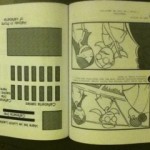
Photo of storyboard pages in "Cafeteria"
The book is easy to buy at Amazon.com.
Leave a Reply
You must be logged in to post a comment.